
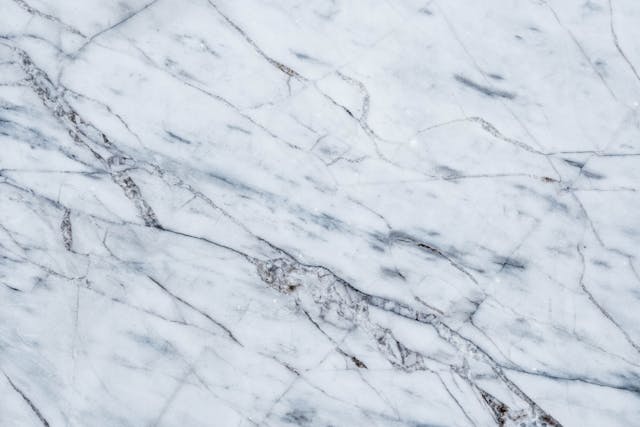
In the world of natural stone, few materials cause more confusion than dolomite. To the untrained eye, it can look almost identical to marble. The soft white background, elegant veining, and polished finish make the two stones appear nearly interchangeable.
Because of this visual similarity, dolomite is frequently presented as a “marble alternative.” Homeowners often fall in love with the look of a dolomite slab, believing it will behave exactly like marble, or sometimes assuming it will perform like harder stones such as quartzite.
The reality is more complicated. Dolomite and marble may look similar, but they behave differently under real kitchen conditions. When buyers assume the materials perform the same way, they often make costly mistakes in renovation projects. Understanding the differences between the two stones is the key to choosing the right material for the right space.
Why Dolomite and Marble Look So Similar
The confusion between dolomite and marble begins with their appearance. Both stones typically feature light backgrounds with soft veining patterns that designers associate with luxury interiors.
Geologically, the materials are related but not identical. Marble is a metamorphic stone formed when limestone undergoes heat and pressure, creating the crystalline patterns we recognise in marble slabs.
Dolomite, on the other hand, is composed primarily of calcium magnesium carbonate rather than the calcium carbonate that dominates marble. Despite this chemical difference, both materials can produce similar visual characteristics once cut and polished. Veining patterns, subtle colour shifts, and polished finishes often make them indistinguishable in photographs or showroom displays.
This is why buyers frequently assume they are simply choosing between two versions of the same stone. In reality, the mineral composition creates different performance characteristics that become obvious only after installation.
The Geological Differences Most Buyers Never See
While the surface appearance of the stones may look similar, the internal structure of dolomite and marble differs significantly. Marble typically contains a high concentration of calcite crystals, which give it its classic brightness and reflective finish. However, calcite is also chemically reactive, particularly when exposed to acids such as lemon juice, vinegar, or wine.
Dolomite contains magnesium within its carbonate structure, which changes how the stone reacts chemically and mechanically. This mineral composition makes dolomite slightly harder and somewhat more resistant to scratching than traditional marble.
On the Mohs hardness scale, dolomite typically measures around 3.5 to 4, while marble averages closer to 3. That difference may seem small, but it influences how the surface responds to daily wear, cleaning products, and kitchen activity.
However, this is where confusion begins. Buyers sometimes assume that because dolomite is harder than marble, it will behave like extremely durable stones such as quartzite or granite. That assumption is rarely accurate.
Etching: The Behaviour That Surprises Most Homeowners
One of the most common complaints from homeowners who install marble countertops is etching. Etching occurs when acidic substances react with calcium carbonate in the stone, leaving dull marks or light spots on the polished surface.
Dolomite behaves differently, but not in the way many people expect. Because dolomite contains magnesium carbonate rather than pure calcium carbonate, it reacts less aggressively to acid. In many cases, mild household acids cause little visible reaction compared with marble. However, this does not mean dolomite is immune to etching.
Instead, the process happens at a slower rate and may appear less dramatic initially. Over time, repeated exposure to acidic foods or cleaners can still dull the surface or create subtle changes in the finish. This is where the misunderstanding becomes expensive. Buyers who believe dolomite behaves like granite or quartzite may use cleaning products or kitchen habits that gradually damage the surface. By the time the difference becomes visible, repairs or refinishing may already be necessary.
Hardness, Porosity, and Daily Kitchen Use
The performance of natural stone surfaces in kitchens depends on three main characteristics: hardness, porosity, and chemical sensitivity. Dolomite tends to perform slightly better than marble in several of these areas. Its higher hardness provides somewhat improved resistance to scratching, and its denser structure generally offers better stain resistance.
In practical terms, this means a dolomite slab can often maintain its polished finish longer under normal household use compared with marble. However, the difference is not dramatic enough to eliminate maintenance requirements. Dolomite still requires sealing to reduce liquid absorption and protect against stains.
Marble is typically more porous and more susceptible to staining and etching, which is why it often requires more frequent sealing and careful cleaning products. (When homeowners fail to consider these differences before selecting stone, they often choose a material that doesn’t match their lifestyle.
For example, a busy kitchen where acidic ingredients are used frequently may demand a more chemically resistant stone. In contrast, a bathroom vanity or decorative wall may accommodate marble’s sensitivity more easily.
The Cost of Choosing the Wrong Stone
When stone materials are selected based purely on appearance, problems tend to appear later. Homeowners who believe they installed a low-maintenance surface may suddenly notice etching, stains, or surface dullness appearing within months.
Restoring natural stone surfaces often requires professional refinishing, polishing, or resealing. While these procedures can repair damage, they also add unexpected costs to the renovation. In some cases, repeated restoration becomes necessary if the underlying material is not suited to the environment where it was installed.
The most expensive mistakes occur when entire countertops must be replaced because the chosen material cannot withstand the conditions of the space. These problems rarely occur because the stone itself is defective. Instead, they arise because the material’s natural properties were misunderstood at the time of selection.
How Professionals Choose the Right Stone
Experienced stone specialists rarely choose materials based on appearance alone. Instead, they consider how the surface will be used. Kitchens, bathrooms, outdoor spaces, and high-traffic areas all place different demands on natural stone.
Professionals typically evaluate several factors before recommending a material:
- The type of cooking activity in the kitchen. Homes where acidic foods and frequent cooking are common may benefit from more durable stone.
- Cleaning habits and maintenance expectations. Some homeowners are comfortable maintaining delicate natural stone, while others prefer lower-maintenance materials.
- The placement of the stone surface. Vertical applications, such as walls and splashbacks, experience less wear than horizontal work surfaces.
When these factors are considered early, the material choice becomes far more predictable. A dolomite slab can perform beautifully in many kitchens when homeowners understand its characteristics and maintain it appropriately. The key is selecting the stone with realistic expectations rather than relying purely on visual similarity to marble.
How to Ask the Right Questions Before Choosing Stone
One of the simplest ways to avoid confusion between dolomite and marble is to ask specific questions during the stone selection process. Instead of asking whether a stone “looks like marble,” homeowners should ask about performance characteristics.
Important questions include:
- What is the hardness of the stone on the Mohs scale?
- How resistant is it to acid etching?
- How frequently should it be sealed?
- How does it perform in high-use kitchens?
Stone suppliers who understand their materials should be able to answer these questions clearly.
Another useful step is to request a sample piece of the stone. Testing it with common household items such as lemon juice or vinegar can provide insight into how the material reacts to acids.
These simple tests can prevent costly misunderstandings later.
Conclusion
Dolomite and marble share a visual elegance that has made both materials popular in luxury interiors. However, the similarity in appearance often hides meaningful differences in how the stones behave in everyday environments.
Dolomite is generally slightly harder and somewhat more resistant to scratches and acids than traditional marble, but it still requires careful maintenance and sealing.
When homeowners assume that a marble-looking surface will behave like a completely different material, disappointment often follows.
Choosing the right stone requires more than selecting a beautiful slab. It requires understanding how the material will perform under real conditions. In many renovation projects, the biggest regret is not the stone itself, but the misunderstanding of how it behaves once installed.
FAQs
1. Is dolomite the same as marble?
No. Dolomite and marble are different natural stones with different mineral compositions and performance characteristics.
2. Is a dolomite slab better for kitchens than marble?
Dolomite is generally slightly harder and more resistant to etching than marble, making it somewhat more suitable for kitchen surfaces.
3. Can dolomite still etch like marble?
Yes. Dolomite reacts more slowly to acids but can still etch under repeated exposure to acidic substances.
4. Does dolomite require sealing?
Yes. Like most natural stones, dolomite should be sealed periodically to reduce staining and maintain its finish.
5. How can I tell if a stone is marble or dolomite?
Stone suppliers or fabricators can identify the material through mineral composition, hardness tests, and quarry origin information.
